
Why Collectors Value Black and White Flower Photography Prints
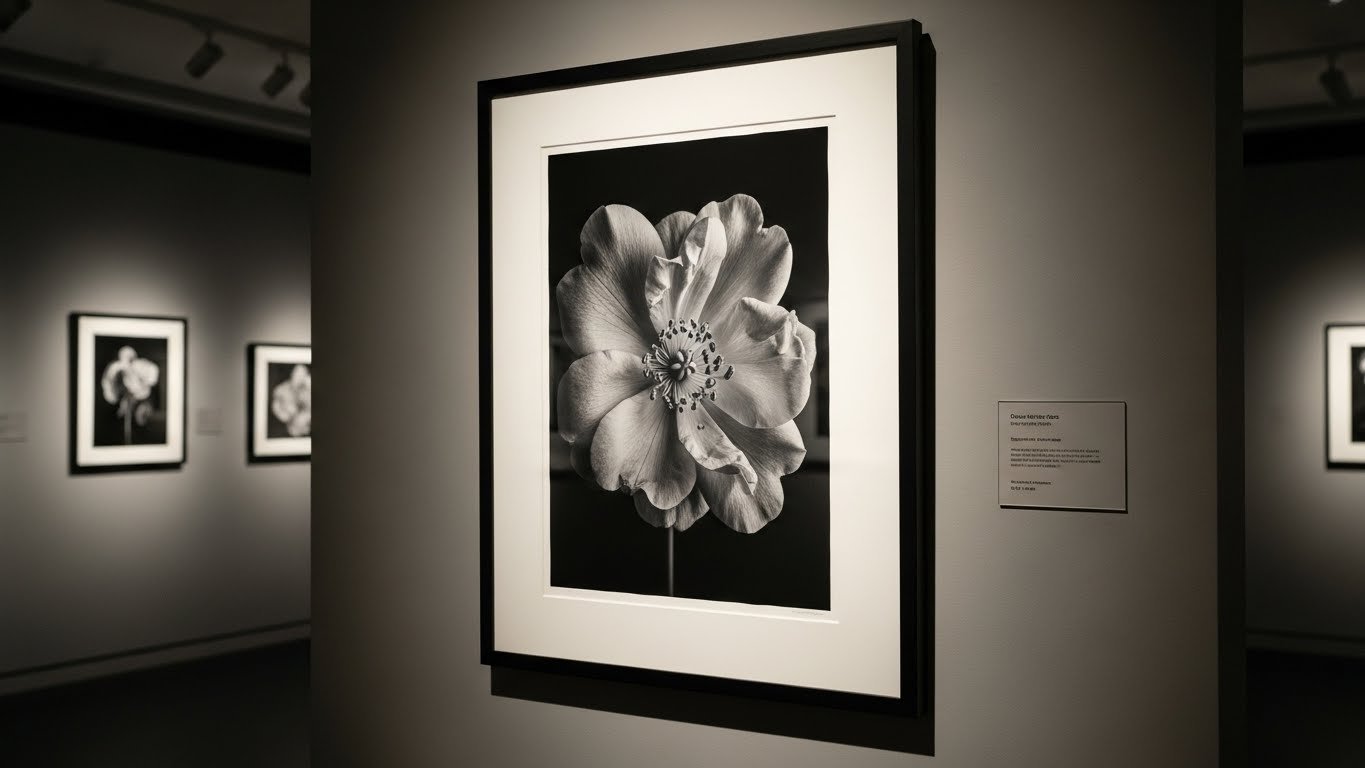
Flowers are often dismissed as decorative subjects. Flowers’ black and white photography resists that assumption. The approach removes sentimentality. What remains is structure and light. Petals become planes. Stems become lines.
These images do not celebrate color. They examine form. For collectors, this shift is critical. It transforms a familiar subject into something contemplative and lasting.
Flowers photography beyond representation
These images function as visual studies rather than botanical documentation or pretty decoration. Flowers photography from the collection isolates formal elements that color would completely overwhelm or obscure.
A petal’s curve becomes a study in geometry while a stem’s angle creates compositional tension across the frame.
The work asks viewers to see familiar subjects as if they’re encountering them for the first time, without any preconceived ideas about what flowers should look like.
That defamiliarization is what creates value for collectors who want art that challenges comfortable viewing habits.
Black and white photography of flowers as sculptural forms
Contrast builds volume and weight in ways that color photography can’t match. Light carves out three-dimensional form on a flat surface while shadows create actual depth rather than just suggesting it.
Black and white photography strips away the decorative associations that color brings and reveals the underlying architecture of organic structures.
The flowers stop being recognizable plants and become abstract studies in form, which matters greatly to collectors who value conceptual depth alongside visual appeal.
Why collectors trust restraint
Subtle work ages better than spectacular work because it doesn’t rely on immediate impact. Collectors investing in black and white flower photography understand that trends fade, but formal quality endures.
The work doesn’t chase what’s currently popular in galleries or design magazines. It focuses on timeless principles of composition, light, and structure that will remain relevant long after acquisition. That focus ensures the prints don’t become dated because they were never built on anything temporary or trendy in the first place.
Darkroom tradition as credibility
Process credibility matters significantly to serious collectors who understand the difference between craft and convenience. Darkroom work signals genuine intention and developed skill rather than quick digital manipulation.
The silver gelatin prints available at my gallery, Dreyers Photos, carry tonal richness that digital output simply cannot achieve, no matter how expensive the printer. Blacks have actual depth while whites maintain texture and presence. Collectors aren’t just buying images but acquiring evidence of physical engagement with materials and mastery of analog techniques.
Living with floral images that evolve
Meaning and visual relationships deepen as familiarity with the work grows over months and years. A shadow that seemed merely compositional suddenly reveals structural significance. A curve that appeared decorative shows how it relates to other elements in the frame.
Black and white photography of flowers continues to reward sustained attention instead of exhausting its interest quickly, like most decorative art. That evolving quality makes these prints valuable for long-term collection rather than short-term interior design trends.
Conclusion
Collectors are drawn to work that continues to reveal itself over time, and black and white flower photography offers that depth. By removing color, these images shift attention to structure, balance, and light, allowing familiar subjects to be experienced in a more thoughtful way.
The photographs resist decorative expectations and instead invite closer looking and long-term engagement. This focus on form, process, and restraint is what gives the work lasting relevance.
Rather than serving as temporary visual accents, these prints become pieces that hold their place in a collection through sustained meaning and quiet authority.
FAQs
Why do photographers choose black and white for flower photography?
Because it changes how flowers are seen. Without color, flowers stop being decorative and start becoming sculptural. Shape and light take over.
Can flower photography be abstract rather than realistic?
Very much so. Many artists crop closely, blur intentionally, or focus on patterns. The result can feel more emotional than descriptive.
Can abstract flower photography work better in black and white?
Often, yes. Black and white strips away expectations. The viewer no longer asks what color the flower is and instead focuses on rhythm, movement, and contrast.
Where can you buy authentic black and white flower photography prints?
Again, galleries, artist websites, and curated photography platforms are the best places. Look for limited editions and clear information about printing methods.